Drain odor: don't mask it, but find out where the sewer air is coming in
Sewer odor in a bathroom, kitchen, toilet or utility room does not automatically mean there is a serious blockage or broken sewer pipe.
In many homes, the cause is much closer.
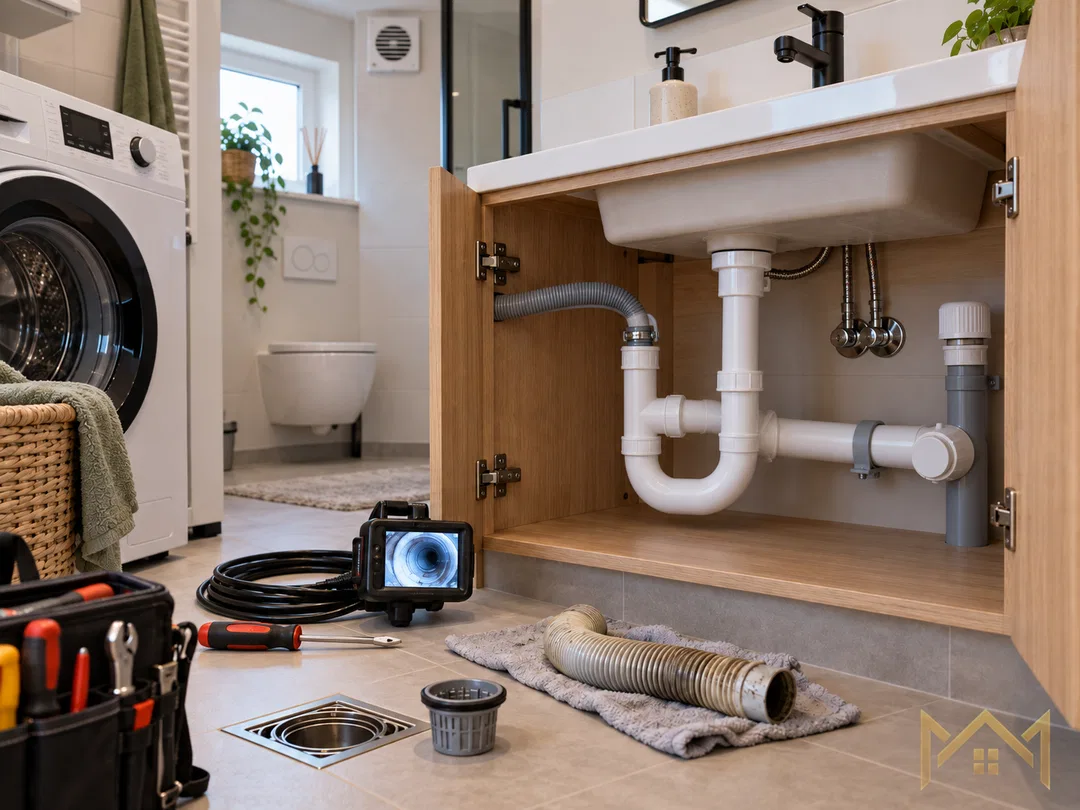
A good drainage system blocks sewer odor with a water seal in the trap. This is the layer of water in the U-shaped bend under, for example, a sink, shower or kitchen drain.
According to the article, a good water seal holds approximately 50 mm of water. If that water disappears or the water seal is completely missing, sewer odor can enter the home directly.
At MULTI Klussenbedrijf, we therefore first look at:
water seal → trap → ventilation → connections → slope → vent stack.
Only then is it determined whether something really needs to be opened up.
1. A dry water seal
A drain that is not used for a long time can slowly dry out.
This happens, for example, with:
- a second shower;
- a rarely used sink;
- a floor drain;
- a washing machine connection that is no longer in use.
In a heated home, such a trap can dry out within approximately 3–6 weeks according to the article.
The first test is simple:
pour approximately 1–2 liters of water through each suspect drain.
If the odor disappears afterwards, the water seal was probably empty.
If the odor returns within a short time, further investigation into ventilation or pipe layout is needed.
2. Flexible ribbed hose as a permanent trap
Flexible drain hoses are quick to install, but often form a poor permanent solution.
Fat, soap residue and dirt accumulate in the ribs.
Additionally, the hose often sags into an irregular bend, preventing a stable water seal from forming.
A fixed plastic trap with a clear water bend is therefore usually more reliable.
During a kitchen or bathroom renovation, we therefore prefer a fixed, accessible and cleanable drain setup.
3. Too many appliances on one trap
Connecting a dishwasher, washing machine and sink all to one improvised connection can cause problems.
When an appliance pumps water out quickly, it can create pressure differences that partially empty the water seal of another connection.
When installing a new kitchen or utility room, it is therefore important to determine in advance how many drain connections are needed and how they should be connected.
4. Washing machine drain connected too deep
The position of a drain hose is also important.
When the hose is pushed too deep into a vent stack and even reaches the water of the water seal, the drainage system can malfunction.
Wastewater can back up or the water seal can lose its function.
Such a detail seems small, but can be precisely the reason why a room continues to smell.
5. Gurgling drain? Check the ventilation
A drain must not only be able to remove water.
The pipe must also be able to draw in air.
When this doesn't happen, negative pressure builds up in the pipe.
This negative pressure can draw water from the weakest water seal.
A typical signal is:
first gurgling → then sewer odor.
The vent stack is normally ventilated through the roof. In some situations, an additional membrane ventilator is used.
If such a ventilator is sealed off during a renovation or hidden behind a closed soffit, odor problems can occur later.
6. Odor especially when the range hood or ventilation is on
This is an important indicator.
When mechanical ventilation or a powerful range hood runs, negative pressure develops in a well-sealed home.
Air then tries to enter through other openings.
If an empty or weak water seal exists somewhere, sewer odor can be drawn in precisely there.
This is why a customer might say:
"Normally I barely smell anything, but as soon as the range hood turns on it starts."
This does not automatically point to the range hood itself. In this case, the range hood makes an existing problem in the drainage system visible.
7. Floor drain without a good water seal
Especially in older bathrooms, a floor drain can be a weak point.
Sometimes the water seal is damaged or the insert is missing.
In previous renovations, it also happens that an old floor drain is tiled over while the drain pipe underneath remains open.
Then sewer odor can continue to escape behind the tilework.
This is why a floor drain should be checked during a bathroom renovation before new tilework is applied.
8. Insufficient slope
A pipe without sufficient gradient can also cause odor.
When wastewater remains in a horizontal pipe, residue accumulates.
As a practical guideline, the article mentions approximately:
- 40–50 mm drain: approximately 10 mm slope per meter;
- 110 mm pipe: approximately 5 mm slope per meter.
A sagging pipe can cause the same problem.
In such a situation, a new trap won't help if the actual cause is further down the pipe.
First, easily rule out yourself
Before anything is opened up, you can check a number of things.
For example, start by refilling all traps and floor drains with water.
Then check where the odor is strongest.
Also check whether:
- the washing machine drain is positioned correctly;
- an old pipe is only sealed with tape;
- trap connections are tight;
- the odor changes when mechanical ventilation or the range hood is off.
Chemical drain cleaners are usually not a good first step for an odor problem.
They don't fill an empty water seal and don't repair incorrect ventilation. With older connections, aggressive products can also cause damage.
When is camera inspection or smoke testing needed?
Does the sewer odor keep returning after all water seals are filled?
Do you smell it in multiple rooms?
Or do you consistently hear gurgling drains?
Then further investigation may be wise.
With a hidden defect, incorrectly connected pipe or vent stack problem, a camera inspection or smoke test can help locate the cause first before walls, floors or ceilings are opened.
This fits our general approach:
first investigate, then open up strategically.
What does it cost to fix drain odor?
The blog provides, among other things, these indications for existing homes in the Randstad in 2026:
- clean or replace trap: approximately €75–€175;
- install or replace ventilator: approximately €100–€250;
- replace floor drain with good water seal including local tile repair: approximately €250–€700;
- camera inspection or smoke test: approximately €150–€400 for inspection.
Actual costs depend heavily on accessibility.
A trap under a sink is easily accessible.
An incorrectly connected drain behind a fully tiled bathroom wall obviously requires more work because demolition and repair are also needed.
Address drainage problems before a renovation
Is a bathroom, toilet or kitchen being reconfigured?
Then often also change:
pipe length → slope → trap position → connection points → ventilation.
This is why it's wise to check these components before the floor or wall is sealed.
An error that is visible during the technical phase is relatively easy to correct.
The same error after new tilework can become much more expensive.
Apartment with shared vent stack
In apartments, the cause can sometimes be outside your own home.
Multiple homes can share the same vent stack and roof ventilation.
If there's a problem there, it can affect water seals in different apartments.
In such a situation, consultation with the homeowners association may be necessary.
Troubled by sewer odor?
Please send via AtaList preferably:
- photos of the sink, shower, floor drain or sink in question;
- photos of the pipework under the sink or kitchen cabinet;
- information about when the odor is strongest;
- and whether you hear gurgling sounds.
Tell us for example:
only in the morning / after showering / at the washing machine / when the range hood is on / after prolonged absence / continuously.
That kind of information often helps much more than just "the drain stinks".
This way we can first determine which check makes sense and prevent unnecessary opening of tilework, cabinets or floors.
📧 Email: info@multiklussenbedrijf.nl
💬 WhatsApp: Send us a message
📝 Quote: Request a quote directly
Please log in to add a comment.
LoginNo comments yet. Be the first to comment!